
Serving All Makes & Models Since 1947
651-228-1316
982 Grand Ave • St. Paul, MN 55105
Mon-Fri: 7am - 6pm
982 Grand Ave • St. Paul, MN 55105
Mon-Fri: 7am - 6pm

Your Boat Trailer Spring Maintenance Guide

Although a boat trailer isn’t a part of your boat, but it is an essential component for any boat owner, especially if your boat doesn’t stay parked at the waterfront. During the winter months, you can’t leave your boat out in the open waters, which is why you need to put it on the boat trailer and haul it all the way to your garage or backyard. But as soon as spring comes around, you can get back to boating with your friends. This also means that your boat trailer should be in perfect condition when the winter ends, and there are a few simple steps that you can follow to ensure that it is capable to carry your boat without any issues. Here is a quick summary of everything you should do:
- Check the tires for any wear and tear
- Check tire pressure
- Carry a spare tire
- Install wheel bearing protectors
- Clean up the trailer brakes
- Get your brake shoes or pads inspected
- Check the brake fluid
- Lubricate the trailer coupler
- Check the trailer lights
How to Maintain Your Boat Trailer
Let’s discuss some of the ways you can maintain your boat trailer.
Checking the Tires and Wheels on the boat trailer
Your trailer’s tires have to do the most work when your boat is loaded on top of it, and you should always check their tire pressure before you do so. Also check the surface of each tire for any wear and tear or damage. If something seems wrong, change the tire immediately. Another wise method is to always carry a spare tire when you are off for a boating trip.
Once you are done with the tires, have a look at the wheel bearings and see if there is any rust on them. If you have wheel bearing protectors, then you don’t have to worry. If not, then get them installed before your next trip.
Inspecting the Trailer Brakes
The next step involves checking the trailer brakes, and you should start by cleaning them to remove any debris or dirt that may have accumulated on them. Once this is done, you should have your brake pads or shoes checked by a professional. They can also check the brake lines for any damage or leakage. One this is done, you can also have a look at the brake fluid levels. If the level is lower than the marker, then you need to replenish it.
It would also do you good to check the trailer coupler and see if it works smoothly. You can also lubricate it properly to avoid any friction.
Examining the Trailer Lights
Last but not least, your trailer lights also need to be in working order to ensure maximum safety, as they let other motorists know that you have a trailer hitched to your vehicle. If the lights are dim, flickering or fused, you can check the trailer light connection for any corrosion on its metal pins. To avoid this, you should keep it covered when not in use.
Other problems with your trailer lights could include a problem with the grounding, or a fused bulb. You can consult an auto electrician or technician to resolve these problems.
If you are not sure on how to go about with your trailer maintenance, you can simply get a professional repair service to help you in this regard, as they are experienced and know their way around a boat trailer.
Getting Your Car Out After Winter Storage – What you need to know
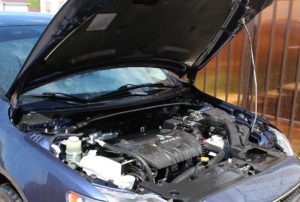
As the snow begins to melt, more and more people are getting their car out for winter storage. If you are planning to do the same, know that your car may not be ready for the road. Therefore, you must pay special attention to your car to ensure it is in excellent driving condition for the summers. Here are a few must follow tips that will help you get your car ready for summer time.
Check for Fluids Underneath the Hood after it was in Storage
The last thing any car owner wants is their car to be leaking fluids. Driving with fluid leakage is a surefire way to get involved in accidents. It could also cause several other issues, deteriorating your car’s quality in more ways than one. Fortunately, checking for fluids is relatively easy as all you need to do is get your flashlight on and check for leaks. Merely opening your hood can give you a clear idea of what you should be looking for. Consider searching for loose fittings and cracks to find out where your car might be leaking from the most. It would also help if you checked every fluid starting from the power steering to transmission.
Inspect the Battery
If you leave your battery inside your vehicle along with a high quality trickle charger, there is a high chance that it will be ready to drive as soon as you take it out of the storage. However, if you reinstalled the battery recently, make sure that you check its voltage. If the battery is lower than twelve volts, consider charging it before you take your car out for a spin.
Get Your Tires Changed
Keeping your car stored inside for an excessive period can often damage its tires. Before you put your car in first gear, make sure that you inspect your tires thoroughly to steer clear from danger. Check them for things like bulges, oxidation, crack, wear and tear etc.
Take Your Vehicle for a Spin after Storage
If everything in your car seems fine, take it out for a drive of at least thirty minutes, and change its oil to steer clear from any problems. The best thing would be to drive your car prior to changing its oil as it would let the oil to clear the engine out, removing the deposits. If you think your car is ready for spring and summer time, then just clean it up and you will be good to go. You can also go the extra mile and get your vehicle inspected by professional car maintenance services.
Things Every Vehicle Owner Needs to Know About Pothole Damage

Potholes are present in almost every road and street no matter how well maintained they are. Spring and winter seasons, in particular are known for causing potholes. One would think that avoiding these hindrances on the road would be quite straightforward but it really isn’t. Sure, you may be able to drive away from a few of them but you are bound to hit one sometime or the other.
Once your vehicle starts coming in contact with potholes on a regular basis, it will go through a significant amount of wear and tear, leading to long as well as short term damage.
. Your vehicle will go through significant wear and tear if it hits enough paved roads, which could lead to short term and long term damage.
When and How do Potholes Develop
Potholes generally tend to develop once water goes inside the ground and gets frozen. This mostly happens in the winter season, freezing and expanding the water. Whenever this happens, the area beneath the road goes through a lot of wear and tear and it gets worse when vehicles run over the road, resulting in potholes of different sizes.
Avoiding a Pothole
As mentioned earlier, while it is relatively easy to drive around some potholes, you are bound to hit one sometime. This is because there are plenty of these holes present in places you wouldn’t expect. For all you know, the puddle ahead of you could contain a pothole large enough to damage your wheels with just one hit.
So, it would be best to remain completely cautious when driving on high traffic roads, making sure you can prevent your car from taking pothole damage. Follow the tips mentioned below to avoid running into too many potholes.
Don’t Rush
People often think that driving their cars fast could help them prevent pothole damage. This simply is not true – if anything, your car may endure more wear and tear than you initially imagined. This could result in flat tires, especially if you hit a large pothole. Therefore, it would be best to slow your vehicle down as much as possible, making sure your car remains safe from paved roads.
Don’t Hit the Brakes Too Hard when approaching a pothole
You must be very cautious when hitting your brakes near potholes. This is because hitting them too abruptly could cause your vehicle to slip. So, whether you are driving on a high traffic road or a low traffic one, ensure your speed is on the lower side.
If your vehicle has taken too much damage from potholes, make sure you take it to a professional auto repair service to increase its longevity and overall condition.
How to Inspect Your Vehicle for Driving and Road Trips
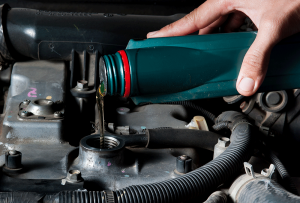
Inspect your vehicle regularly. When you go on a road trip, you should have a great time exploring the beautiful sites and taking in the sensations of an adventure instead of changing car tires or engine oil. Your car should offer you a smooth driving experience. Dealing with car maintenance issues when driving across towns is frustrating. Therefore, you must prepare your car for whatever road trip you have – a long or short one.
Inspect Your Vehicle for Road Trips
You can do some inspections easily to prepare your car for a road trip. However, for others, you may need the help of a professional technician. You must check:
Tires
You must check the tires before you allow them to contact the road. Driving across cities with bad tires is not an ideal option. Start by checking the tread of your tires and move on to the air pressure. You will need a coin to check the tread of your tires.
Apart from the tire treads, you want to make sure that they have optimum air pressure in tires. You will need the use of a gauge for this; remove the tire cap, insert the gauge and mark the readings. Make sure that each tire has the factory-recommended air pressure.
Brake Pads
For many folks, this prepping measure may be beyond their comfort or skill level. However, you must check whether your brake pads are at the minimum thickness that they need to be. If you hit the brakes and they tend to make a squeaky sound, this is an indication that your car needs new pads.
Oil
Checking oil before you head out for a road trip should be a no-brainer. Make sure that your oil levels are optimum before you take your car out for a long trip. Think of the engine oil as a hydration drink for the engine. It needs enough of it to run, not too much and not too little.
Inspect the Belts
Belts are incredibly important, as not maintaining the belt will likely strand you in the middle of the freeway. Most cars today have a serpentine belt, and it connects to every working of an engine. This single belt drives your alternator to charge your battery, your air conditioning compressor, the water pump that cools your engine, and the power-steering pump.
Therefore, you do not want to ignore this part if you plan on going for a long driving trip. To keep the belts in shape, make sure that there are no cracks inside the ribs of the belt. Other red flags show that pieces are missing in those ribs.
Conclusion
Lastly, make sure that you are not carrying unnecessary weight in your car before you head over to a road trip. Also, do not forget to carry an emergency tool kit and a spare wheel. Try to put everything in the car without having to latch it on top of the roof. This tampers the aerodynamics of the car and lowers down the MPG.
5 Things to Consider when Driving on Icy Conditions
 Icy road conditions are some of the most dangerous driving conditions you will experience. The slick surface makes it very difficult to gain traction, so knowing how to drive on ice can be life-saving information. Today, we are going to look at 5 things you need to consider when driving in icy conditions.
Patience – Drive Slower, Take Your Time
The best advice that you can take when driving in icy weather is to take your time and drive slower than you normally would. You should consider making some extra time before you leave so that you can take your time while still arriving at your destination on time. Driving slow can dramatically decrease your chances of getting into an accident. Not to mention, this will also reduce the amount of damage your car will receive if you do happen to lose control and hit something.
Brakes – How To Use Them On Ice
While brakes are usually used to help control your vehicle and bring you to a stop in and out of emergency situations, they can do more harm than good if used incorrectly on ice. Slamming on your brakes in icy conditions can send your vehicle into an uncontrollable skid. What you will want to do is travel slowly enough to allow the weight of your car to bring your vehicle to a stop if needed. If you do need to use your brakes on ice, slowly pump your brakes to avoid locking up your tires.
Skidding – How To Get Out Of A Skid
Skidding refers to losing control of your vehicle on ice and sliding across the ice with no traction. During a skid, many drivers freeze up or overcorrect, causing them to spin out of control. In order to safely get out of a skid, you will want to slowly turn into the skid and slowly pump your brakes to try to refrain traction. Once you feel your vehicle regain traction and start to straighten out, slowly move your steering wheel back into position to drive out of your skid. This may not always mean ending up in the same direction, sometimes it will simply reduce the amount of skidding you could have potentially done had you overcorrected or froze up.
Temperatures – Watching For Freezing Temperatures
Icy road conditions happen when water on the road freezes due to a drop in temperature. Watching the outdoor temperatures is a great way to stay on notice about changing road conditions. Using an in-car display that shows outdoor temperatures is a great way to determine where you may need to watch for ice patches on the road. If your car does not have this feature, you can simply check the temperature changes before leaving the house to see what you can expect.
Snow Tires – Do They Help On Ice?
Many people think that snow tires and snow chains will assist in icy road conditions similar to how they help in snow packed roads. The answer here is not, they do not add any additional traction on ice. Icy roads are too slick for snow tires and tire chains to make a difference, but if you already have them on your vehicle for winter driving, they certainly won’t hurt.
Why Using an ATPMS Could Be Helpful for Your Tires
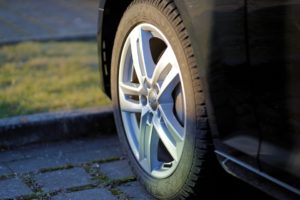
Using ATPMS can be helpful for noticing a tire is low on air. Having flat tires can be quite a pain no matter how long or short your trip is. Some people even notice flat tires when they open their garage. Whatever the case, having deflated tires is the last thing anybody wants. Have your vehicle’s tires flattened during a trip or while parked? If yes, you would agree that it can be quite frustrating. While you can change your tires and get your vehicle up and running, there are plenty of other solutions as well.
Taking some precautionary steps and performing regular maintenance are excellent ways to maintain your tire’s air for long periods. Let us talk about some proven ways to prevent PSI leaks, ensuring your tires remain inflated for long periods.
Tire Rotation and ATPMS
Rotating your car’s tires every now and then is an excellent way to improve longevity as it reduces wear patterns caused due to excessive driving. The NHTSA suggests that tire rotation is one of the best tips to make sure a tire lasts long. Some people prefer taking their car to the mechanic while others are capable of doing it all by themselves.
If you want to rotate your tire’s all by yourself, consider checking your car’s manual to ensure you are following the right steps. While performing tire maintenance, ensure to check the tire’s treads and sidewalls for any faults while ensuring each tire has adequate PSI levels.
Don’t Overload Your Vehicle
Most car owners know the PSI levels their vehicles require and you may be one of them too. However, you should still consider re-checking them to make sure you aren’t making mistakes. This will also help find out the exact weight your vehicle can carry. Ensure, that you keep the number in mind whenever trying to load your vehicle up to avoid any damage.
What’s more, every experienced mechanic will tell you that putting too much load on your car can cause a lot of damage to its tires. If you do intend to carry heavy luggage, it would be best to increase the tire’s PSI levels to make sure it can bear the weight. You should also observe the sides of your tires to determine if they can carry heavy loads.
If you don’t think that the tires are capable of bearing too much weight, consider inflating them to maximum pressure. Otherwise, removing some luggage may be the only solution.
Check PSI with an ATPMS
Many car owners tend to slack off when it comes to checking the PSI levels of their tires, and it is one of the reasons why they become deflated so quickly. Fortunately, avoiding this problem is relatively straightforward as all you need to do is check tire pressure with the help of an ATPMS. This monitoring system offers tremendous results and can help you determine the right amount of pressure for your tires.
Driving in Snow and Ice this Winter
 Driving without a care in the world is the last thing you would want to do during winter. You may have even come across loads of drivers who just speed by you. Make sure you don’t try to emulate them, as it could lead to terrible consequences. The more slippery the road, the harder it is to drive, but it doesn’t mean that you have to give up on driving altogether. Instead, follow the tips mentioned in this piece to remain collected, calm, and most importantly safe.
Look Ahead
It is important to look far ahead when the roads are too slippery. While it may seem like an insignificant thing, doing so will help you think in advance, allowing you to avoid potential hazards. When you can anticipate what is about to come up ahead, you can strategize and create mental maps that would help you drive safely no matter where you are.
Slow your car down as often as you can and double the current stopping distance that you would generally use, and you will significantly reduce the risk of crashes.
Be Careful of the Skids
No matter where you are driving, you are eventually bound to hit a slippery spot which may cause your vehicle to slide towards danger. Whether it’s a big skid or a small one, managing them is indeed possible. What’s more, you can even control your car after encountering a dangerous skid. Just make sure that you don’t hit the brakes too hard.
You’d be surprised to learn that merely being gentle with your brakes can prevent car crashes. As simple as it may seem, don’t panic when you encounter a skid. Instead, calm your nerves down and assess your particular situation. You can ease off on the gas if there is a front wheel skid. This will help your vehicle to regain composure and traction.
However, if you encounter a rear wheel skid, it would be best to steer your vehicle in the exact direction its wheels are turning. For instance, if the rear wheels are moving towards the left, slow your accelerator down and steer towards the left. If they are moving towards the right, however, steer your wheels on the right.
Keep the Stopping Distance in Mind when Driving
Merely being aware of your stopping distance can help you avoid accidents. Generally, people tend to maintain a stopping distance of four to five seconds. However, things are massively different during winters as cars tend to slip and slide too much. This is why, maintaining a braking distance of eight to ten seconds would be more ideal.
While following some basic winter driving tips can be a life saver, you should also prime your vehicle for the winter season. You can do this by showing your car to a renowned auto repair service, making sure you are ready for the hurdles of driving on slippery roads.
Causes of Battery Failure in Freezing Weather
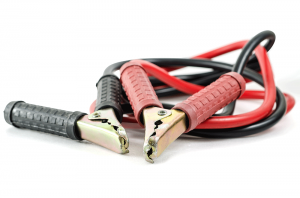
Even though lead batteries discharge more than other batteries, extreme weather can increase the discharging process. A lead battery can last almost three to four years. That is why winter can be dangerous for your battery’s life. In severely high or low temperatures, your battery experiences an increase in the build up of lead sulfate particles, which evaporates the electrolytes.
On the other hand, the harsh winter weather slows down the battery’s chemical reactions. This reduces productivity and leads to battery failure. The sluggishness of oil and the cold engine requires more energy to start up, but deforestation and heat rapidly discharge the battery.
Causes of Battery Failure
1. Loose Cable Connections or Corrosion
Like any other battery, your car’s battery also includes positive and negative plates. Every car’s battery has these terminals. When the cables start loosening or corrosion develops close to the terminals, it becomes challenging to start your car’s engine. To solve the problem, you need to check the cables and clean the battery.
2. Chilly Temperature
Cold weather slows down everything, even the electrolytes in your car’s battery. This slows down the chemical reaction that powers the engine. When the temperature is around 32 degrees Fahrenheit, your car loses 30 percent of its strength. When the temperature goes down to 0 degrees Fahrenheit, turning on the engine becomes difficult. Nonetheless, you can try numerous techniques to keep your battery from freezing.
You can visit Lloyd’s Automotive in St Paul, MN, for a pre-winter inspection. They have experience in fixing cars with frozen batteries. Early inspection will help them prevent the battery from failing. Furthermore, you can warm your engine by blocking the heater, so the battery does not have to force it to start and drain additional power.
3. Excessive Use
Your car may stop working because of how your drive. Your battery will wipe out if you forget to turn off the headlights overnight. The battery already experiences a lot of stress due to chilly weather. Using excessive and unnecessary accessories, such as radio, heating, and cooling systems, expedites the decaying process. Winters are a hard time for you and your car’s battery, so why don’t you give it some rest by parking it indoors? But before you do so, ensure that your battery is full.
How to Know Your Battery is Becoming Weak
Your battery grows weak if you encounter any of these signs:
- You start to smell rotten egg or sulfur smell from your car
- The engine takes a lot of time to start
- A lot of jump starts
- You can hear cranking and clicking, but the battery fails to start the engine.
- Different accessories stop working
Conclusion
Lloyd’s Automotive in St Paul, MN, will not only help you with pre-winter inspection, but will also help restore your car’s battery. The professional team at Lloyd’s Automotive has extensive experience in solving battery problems. They will also help you with tips and techniques to prevent battery failure due to chilly weather.
Fluid Flush and What you Need to Know
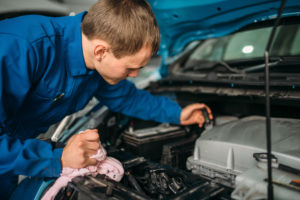
You’ve probably seen it. A vehicle stopped on the side of the road with smoke coming out of the hood. That’s an overheated engine, and it’s not a problem anyone wants to deal with. If you take good care of your cooling system, chances are you’ll never have to deal with this problem. Regularly scheduled coolant flushes help keep your cooling system in superior condition. Today, we’ll talk about what a coolant flush is, and why you need to incorporate it as part of your car’s maintenance plan.
How does the cooling system work?
The cooling system works to control the massive amount of heat produced by the engine. It circulates coolant throughout your engine parts to keep them at optimal temperatures. In addition to coolant, the cooling system is also made up of the following:
- Thermostat
- Temperature sensor
- Water pump
- Pressure cap and reserve tank
- Intake manifold gaskets
- Head gaskets
- Heater core
- Hoses
- Bypass system
- Radiator
- Radiator cooling fans
- Freeze plugs
Without the cooling system, heat would destroy your entire engine.
What is a coolant flush?
As your engine ages, rust develops, which flakes off and pollutes the coolant fluids. The purpose of a coolant flush is to replace the contaminated coolant with clean fluids. A coolant flush is different from simply topping off the coolant floods. Topping off is done to make sure there’s enough fluid in the system to function properly. However, this doesn’t strip the coolant of its impurities. The only way to remove these particles is by flushing out and replacing your system’s antifreeze.
Why is it important to get a coolant flush?
There are lots of reasons why getting your coolant flushed regularly is a good idea. For one, it refreshes your antifreeze. As antifreeze ages, two things happen. It loses its anti-corrosion properties, making it less effective, and it gets increasingly more acidic. Too much acidity is bad for your engine, and can even damage some of its components over time. Another benefit to a coolant flush is that this is the only way to remove harmful pollutants from the coolant liquid. These particles can obstruct the thin tubes in the heater core and radiator, which leads to overheating.
Coolant flushes also help keep your water pump in peak condition. It lubricates the water pump and helps ensure unwanted particles stay out of it. Both of these things help your water pump last longer.
How often does it need to be done?
The answer to this question is different for everyone, depending on the make and model of your vehicle. To get specifics on this, it’s a good idea to take a look at your owner’s manual. You can also speak to one of our licensed technicians, who can help you determine a maintenance plan that meets your needs. Since some coolants last as long as 5 years and others only last up to 2 years, it’s a good idea to seek professional guidance with this.
We encourage all vehicle owners to get a complete inspection of their cooling systems every other year at a minimum. This examination should include:
- System power flush and coolant refill
- System pressure level check
- Pressure test
- Internal leak check
- Engine fan test
- Thermostat check
- Visual inspection of all cooling system parts
Do you have questions about your cooling system? Give Lloyd’s Automotive a call today at (651) 228-1316.
Everything You Need to Know About Your Vehicle’s Brake Fluid
Anyone who knows cars knows how important brake fluid is to the health and safety of your
vehicle. Far too often, it’s neglected and underappreciated. Today, we’ll take a look at what
brake fluid does and why it’s so important. We’ll also discuss some tips for keeping your brake
fluid in prime condition.
What is Brake Fluid?
Brake fluid is a hydraulic fluid that transports force throughout the braking system. Since it’s
incompressible, it converts force into pressure and moves it out of the master cylinder to the
calipers. With this pressure, the calipers can clamp down onto the rotors. This is what prevents
your wheels from spinning and brings your car to a complete stop. Without brake fluid, the
entire braking system wouldn’t be able to operate.
Since car engines produce a lot of heat, the brake fluid needs to be able to endure extreme
temperatures. The fact that it has a very high boiling point stops it from all vaporizing. If this
happened, the brakes would give out because there would be no fluid to create hydraulic
pressure. Brake fluid can also maintain a stable viscosity, even when exposed to extreme heat or
cold. Since brake fluid has to travel through complex engine parts, consistent viscosity is
necessary.
Most brake fluid is glycol-ether-based and absorbs water from the surrounding atmosphere. This
means that your brake fluid always contains some amount of water. However, too much water in
your system can be problematic. For one thing, water can corrode metallic engine parts.
Furthermore, too much water can reduce the boiling point of the brake fluid. This could cause
the brake fluid to vaporize, leading to decreased stopping power. To prevent these issues, test the
water content of your brake fluid and replace it periodically.
How often does brake fluid need to be changed?
Over time, brake fluid gets polluted by engine debris, such as rust particles. Depending on the
make and model of your vehicle, we generally recommend a complete flush and replacement of
brake fluids every year or so. It’s important to note that there are several different types of brake
fluid. Each variety comes with recommended changing intervals. If you’re not sure what type of
brake fluid your vehicle needs, don’t worry. Our friendly technicians can help you figure out a
brake fluid plan that’s best for your vehicle.
Signs Brake Fluid should be Changed
The appearance of your brake fluid changes as it ages. New brake fluid is usually clear or
amber-colored. As it’s gradually contaminated by engine debris, its appearance becomes dark
and murky. This is the most apparent sign that you need your brake fluid replaced.
Your vehicle’s fluid levels are always something to be mindful of. From a preventative
maintenance standpoint, it’s especially important to keep an eye on your brake fluid. It’s
perfectly normal to see a small decrease here, but it shouldn’t happen too often. If you’re
experiencing this often, it probably means there’s an underlying issue in your system that
requires maintenance.
Does your brake fluid need to be replaced or tested? Our licensed professionals at Lloyd’s
Automotive are happy to help. Give us a call today at (651) 228-1316.
The Importance of Transmission Fluid and How to Take Care of It
Getting your oil changed isn’t the only fluid that needs replacing in your vehicle. There’s also the transmission fluid. In this article, we’ll talk about everything you need to know about your transmission fluid, including how to keep it in top condition. Let’s dive in.
What is transmission fluid, and why is it important?
The transmission is the part of your engine that allows you to shift into different gears. Without it, we wouldn’t be able to reverse, drive, or park. Over time, this gear changing takes its toll on the transmission. That’s where the transmission fluid comes in. This lubricant minimizes the friction of metal transmission components and works as a cooling agent. The result is smooth gear changing and decreased damage and wear.
Types of transmission fluid
There are several types of transmission fluid. The formula you need depends on the specifics of your vehicle. When in doubt, it’s always best to refer to your owner’s manual or manufacturer. Transmission fluids are generally classified as either automatic or manual.
Automatic transmission fluid is needed for vehicles with automatic transmissions. Some manual transmission vehicles require it as well. It’s a hydraulic fluid that has a lower viscosity than manual transmission fluid. This pressurized fluid plays an important role in many engine functions, including the following:
- Gear lubrication
- Transmission coolant
- Clutch operation
- Valve body operation
- Torque converter operation
- Brake band friction
Manual transmission fluid is thicker. This makes it trickier to shift in and out of gear, especially in colder weather. Because of this, lots of newer manual transmission vehicles require automatic transmission fluid.
Another difference in transmission fluids is traditional or synthetic. Traditional transmission fluid is made of crude oil. As a result, it can oxidize at high temperatures. Synthetic transmission fluid is specifically designed to stand up to heat. That means it won’t be affected by the extreme heat emitted from the engine.
How to check your transmission fluid
Transmission fluid needs to be changed out at specified intervals. Most manufacturers recommend replacement every 30,000 to 60,000 miles. If you’re not sure about the status of your transmission fluid, a visual inspection can be helpful. First, locate the transmission dipstick. This is typically found beneath the hood in the engine compartment. If you can’t find it, then your transmission might be sealed. Some newer vehicles don’t require transmission maintenance. Refer to your owner’s manual for more information on this matter.
Assuming you can check the transmission fluid, remove the dipstick and clean it off. Then, slowly replace it and take it out again. After removing it, you’ll be able to read your fluid level against the markings on the dipstick. If your fluid level is low, it’s important to figure out why that’s happening. Often, it’s indicative of a leak somewhere in your engine. If you suspect this, then reach out to a service provider to identify the root of the problem.
While the dipstick is out, take note of the fluid color. Heathy transmission fluid has a pinkish-red hue. A brownish-red color indicates it’s due for replacement. A dark brown or black shade points to a serious issue with the transmission. This usually only happens when regular service intervals are skipped or delayed.
Avoid expensive repair or replacement of your transmission by keeping its fluid in good condition. Do you have questions about your transmission fluid? Give Lloyd’s Automotive a call today at (651) 228-1316.
How Automotive Comfort Has Evolved
 Have you ever stopped to think about how comfortable your car is? Considering that the earliest automobiles were open-air vehicles, we’ve come a long way. Today, we’re taking a look at how automotive comfort has changed over time. Here we can go over how the comfort has changed in the auto industry.
The early 1900s
Open-air vehicles presented many challenges to drivers. They got exposed to all sorts of poor weather. However, in 1910, Cadillac saw a need to address this problem. They came out with the first closed body car, which protected drivers from the weather. Automakers worked to make their interior spaces as comfortable as possible.
Over the next few years, several inventions made notable improvements to auto interiors. In addition, in 1912, Cadillac installed electronic self-starters, lighting, and ignitions in their vehicles. The next development came from Scripps-Booth in 1914, when they started installing power door locks. These additions have made driving more comfortable and enjoyable.
Climate control
Since early automobiles didn’t have temperature controls like we do today, they were often too hot or too cold. The first interior heating system was introduced by Ford in 1929. In 1940, the Packard Motor Car Company created the first in-car air conditioners and power windows. With these inventions, cars now had heating and cooling. In 1960, Cadillac made an automatic climate control system. This allowed drivers to select an interior temperature for their cars. By 1980, Cadillac released a fully electronic version of this system. This is what is used in the vehicles made today to help you stay comfortable.
Seat improvements
Seating in vehicles has gotten more and more comfortable over the years. In 1966, Cadillac came out with the first heated seats. Similarly, in 1998, Saab came with ventilated seats, which cool you down when sitting in them. Therefore, in the early 2000s, Mercedes added a massage addition in their luxury vehicles. Driving now is comfortable as well as safe for you. Each make and model of vehicle is slightly different, so remember to check the features.
Music innovations
Vehicle sound systems have gone through major changes throughout the years. Audio’s introduction occurred in the 1920s, with the first in-car AM radios. These were standard features by the 1930s. In 1950, the first AM/FM radios were introduced. This was followed briefly with in-car record players. These often malfunctioned and were difficult to use.
The next thing came with the Ford Mustang’s 8-track player in the 1960s. These were eventually superseded by cassette players, which were more functional and compact. In the 1980s, car CD players were invented and took off. These stayed popular until the shift toward compact digital storage media in the early 2000s. These days, there is the ability to stream music from our devices to our cars.
Modern technology and human-machine interfaces
Modern cars are designed with smart ways to interact for technology. This technology is called human-machine interface, or HMI for short. HMI lets you integrate your smartphone with your car for easy control. You can customize a wide range of interior features like Advanced lighting and sound systems, Interior temperature and seat comfort, or Internet and cloud connectivity. There is also the option for Wireless communication, Touch interfaces, and GPS.
HMI technology gives drivers easy access to all these things with the tap of a screen. Auto convenience and comfort has certainly come a long way. Do you have questions about your car’s interior features? Our experienced technicians at Lloyd’s Automotive have answers. Give us a call today at (651) 228-1316. We can inspect your vehicle to help ensure safety and reliability when on the road this year.