
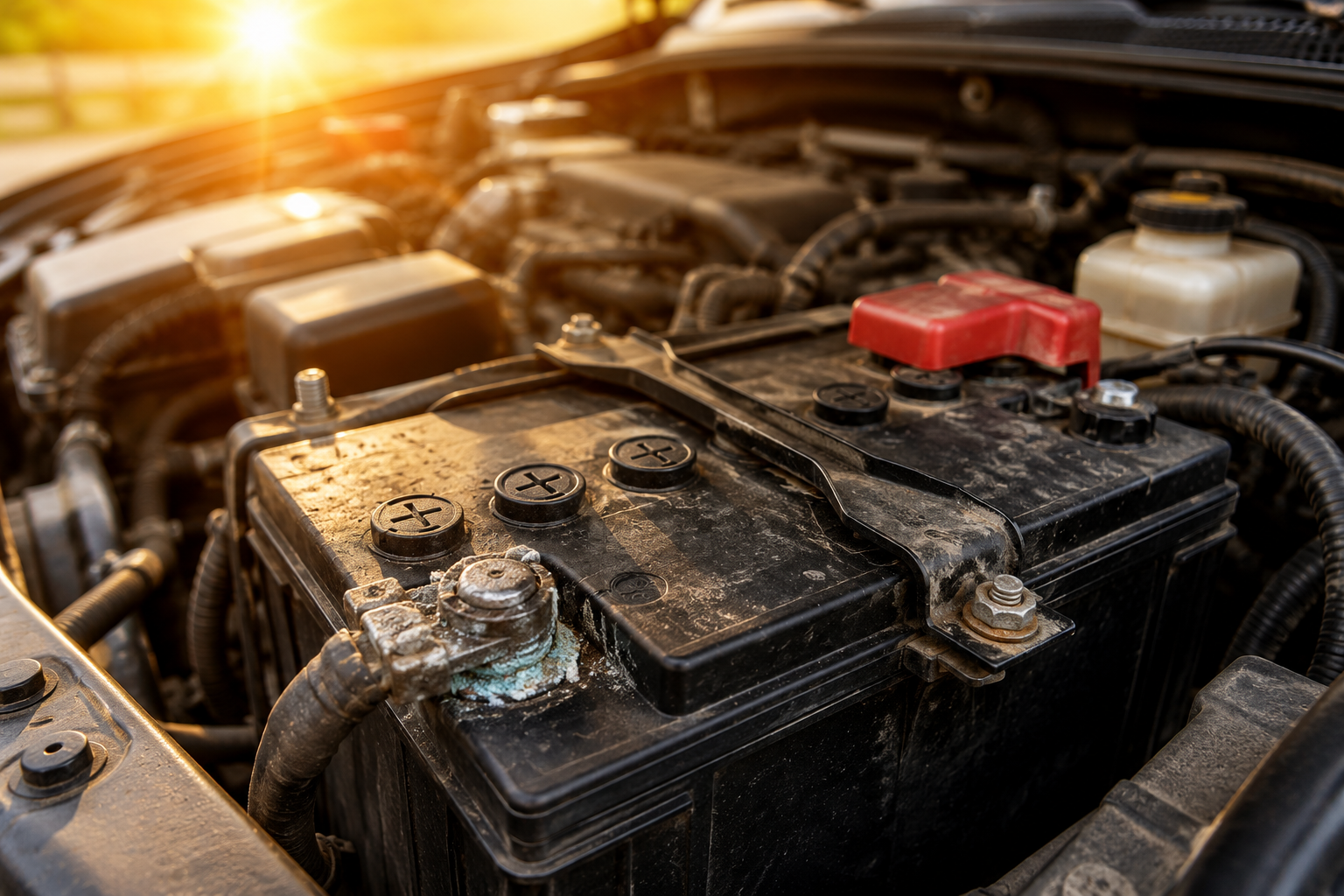
Hidden Danger: How Summer Heat Affects Your Car Battery
When most people think about battery problems, they picture freezing winter mornings and vehicles that won’t start. While cold weather certainly puts stress on your battery, many drivers are surprised to learn that summer heat is often even more damaging. If you’ve ever wondered, does summer heat affect car battery performance, the answer is yes—and in more ways than you might expect.
Extreme temperatures can shorten your battery’s lifespan, reduce its ability to hold a charge, and increase the likelihood of being stranded without warning. During the hottest months of the year, your battery works harder while simultaneously experiencing conditions that accelerate wear from the inside out.
Understanding how summer heat affects your battery can help you avoid unexpected breakdowns and expensive repairs while extending the life of one of your vehicle’s most important components.
Does Summer Heat Affect Car Battery Performance?
The simple answer is yes. If you’ve been asking yourself, does summer heat affect car battery performance, you’re asking an important question that many drivers overlook.
Unlike winter, which often exposes an already weak battery, excessive summer heat actually causes damage that can permanently shorten battery life. High temperatures accelerate chemical reactions inside the battery, causing internal components to deteriorate more quickly than they normally would.
Many batteries that fail during the first cold snap of winter were actually weakened months earlier during the summer.
Why Heat Is Harder on Your Battery Than Cold
Cold temperatures reduce a battery’s available power, but heat actually causes internal damage.
During prolonged exposure to high temperatures:
- Battery fluid evaporates faster
- Internal plates begin deteriorating
- Corrosion develops more quickly
- Chemical reactions accelerate
- Overall battery lifespan decreases
This is why understanding does summer heat affect car battery health is so important. Damage caused during the summer often isn’t immediately noticeable.
Battery Fluid Evaporation
Modern automotive batteries contain electrolyte fluid that allows electricity to flow between internal plates.
When temperatures climb:
- Electrolyte fluid evaporates faster
- Internal components become exposed
- Heat builds inside the battery
- Capacity gradually decreases
Although many modern batteries are sealed, evaporation still occurs internally over time and contributes to premature failure.
Increased Chemical Activity
Heat speeds up the chemical reactions taking place inside every battery.
While that might sound beneficial, excessive chemical activity actually causes the battery to wear out more quickly.
This increased activity can:
- Reduce overall battery life
- Increase internal resistance
- Cause plates to deteriorate
- Reduce charging efficiency
This is one of the primary reasons the answer to does summer heat affect car battery life is unquestionably yes.
Corrosion Develops Faster
High temperatures also accelerate corrosion around battery terminals.
Corrosion can interfere with electrical connections and make it more difficult for your vehicle to start.
Common signs include:
- White or green buildup around terminals
- Slow engine cranking
- Electrical accessories behaving inconsistently
- Intermittent starting problems
Regular battery inspections can often identify corrosion before it becomes a major issue.
Heavy Electrical Demands During Summer
Summer driving places additional electrical demands on your vehicle.
Your battery helps power:
- Air conditioning
- Cooling fans
- Power windows
- Infotainment systems
- Navigation
- Charging ports
- Headlights
As temperatures rise, these accessories often operate for longer periods, increasing strain on the charging system.
When people ask, does summer heat affect car battery performance, they often overlook how much additional work the battery performs during hot weather.
Short Trips Make the Problem Worse
Many drivers assume only long road trips are hard on batteries.
In reality, frequent short trips can be equally damaging.
Short drives often:
- Prevent the battery from fully recharging
- Increase repeated starting cycles
- Leave the battery partially discharged
During hot weather, these conditions combine with excessive heat to accelerate wear.
Signs Your Battery May Be Failing
Heat-related battery failure rarely happens all at once.
Instead, you’ll often notice warning signs first.
Common symptoms include:
- Slow engine cranking
- Dashboard battery warning light
- Dim headlights
- Clicking when starting
- Electrical accessories acting strangely
- Needing jump starts
If you’re beginning to notice these symptoms while wondering does summer heat affect car battery reliability, it may be time for a professional inspection.
Your Charging System Matters Too
Many drivers assume every starting problem is caused by the battery itself.
However, your charging system works together with the battery.
Problems with the alternator, voltage regulator, or charging cables can produce symptoms similar to a failing battery.
A complete battery inspection should include testing:
- Battery condition
- Alternator output
- Charging voltage
- Starter draw
- Cable connections
This ensures the real problem is identified.
Parking Habits Can Make a Difference
Where you park can significantly affect battery temperatures.
Parking in direct sunlight allows heat to build under the hood, increasing temperatures around the battery.
Whenever possible:
- Park in shaded areas
- Use a garage
- Use windshield sunshades
- Crack windows slightly when appropriate
Reducing underhood temperatures can help minimize heat exposure.
How Long Should a Car Battery Last?
 Most vehicle batteries last between three and five years.
However, climate plays a major role.
Hot climates often shorten battery life because elevated temperatures speed up internal deterioration.
If your battery is approaching four years old, summer is an excellent time to have it tested before problems develop.
Can Summer Heat Leave You Stranded?
Absolutely.
One of the biggest misconceptions surrounding battery failure is that it only happens during winter.
In reality, batteries frequently fail during:
- Hot afternoons
- Long road trips
- Heavy traffic
- Vacation travel
Extreme heat combined with increased electrical demand can push an aging battery past its limit.
If you’ve ever asked yourself, does summer heat affect car battery reliability enough to leave you stranded, the unfortunate answer is yes.
Preventing Summer Battery Problems
Fortunately, there are several ways to reduce the risk of battery failure.
Helpful maintenance includes:
- Having the battery tested annually
- Cleaning battery terminals
- Inspecting cables for corrosion
- Ensuring the charging system is functioning properly
- Replacing aging batteries before failure occurs
Preventive maintenance is almost always less expensive than dealing with a roadside breakdown.
Why Professional Battery Testing Matters
Many failing batteries appear perfectly normal during a visual inspection.
Professional battery testing measures:
- Available cranking power
- Battery capacity
- Charging performance
- Overall battery health
These tests often identify weak batteries before they leave you stranded.
Testing becomes especially important during summer when high temperatures continue placing additional stress on the entire electrical system.
Summer Road Trips Increase the Risk
Summer is one of the busiest travel seasons of the year.
Long drives combined with:
- High temperatures
- Continuous AC use
- Heavy traffic
- Additional cargo
place more demand on both the battery and charging system.
Having your battery tested before leaving on vacation can provide peace of mind and reduce the chances of an unexpected breakdown far from home.
Conclusion
If you’ve been wondering, does summer heat affect car battery life, the answer is a definite yes. While cold weather often reveals a weak battery, extreme summer temperatures are frequently the cause of the damage in the first place. Heat accelerates internal wear, increases corrosion, evaporates battery fluid, and forces your electrical system to work harder than usual.
The good news is that many battery failures can be prevented with routine inspections and testing before problems develop. If your battery is several years old or you’ve noticed slow starts, dim lights, or other electrical issues, now is the perfect time to have it checked.
At Lloyd’s Automotive, we’re committed to helping drivers stay safe and reliable throughout every season. If you’re wondering whether summer heat has affected your battery or you simply want peace of mind before your next road trip, contact us here to schedule a battery inspection. Catching a weak battery early can help you avoid an inconvenient breakdown when you least expect it.